
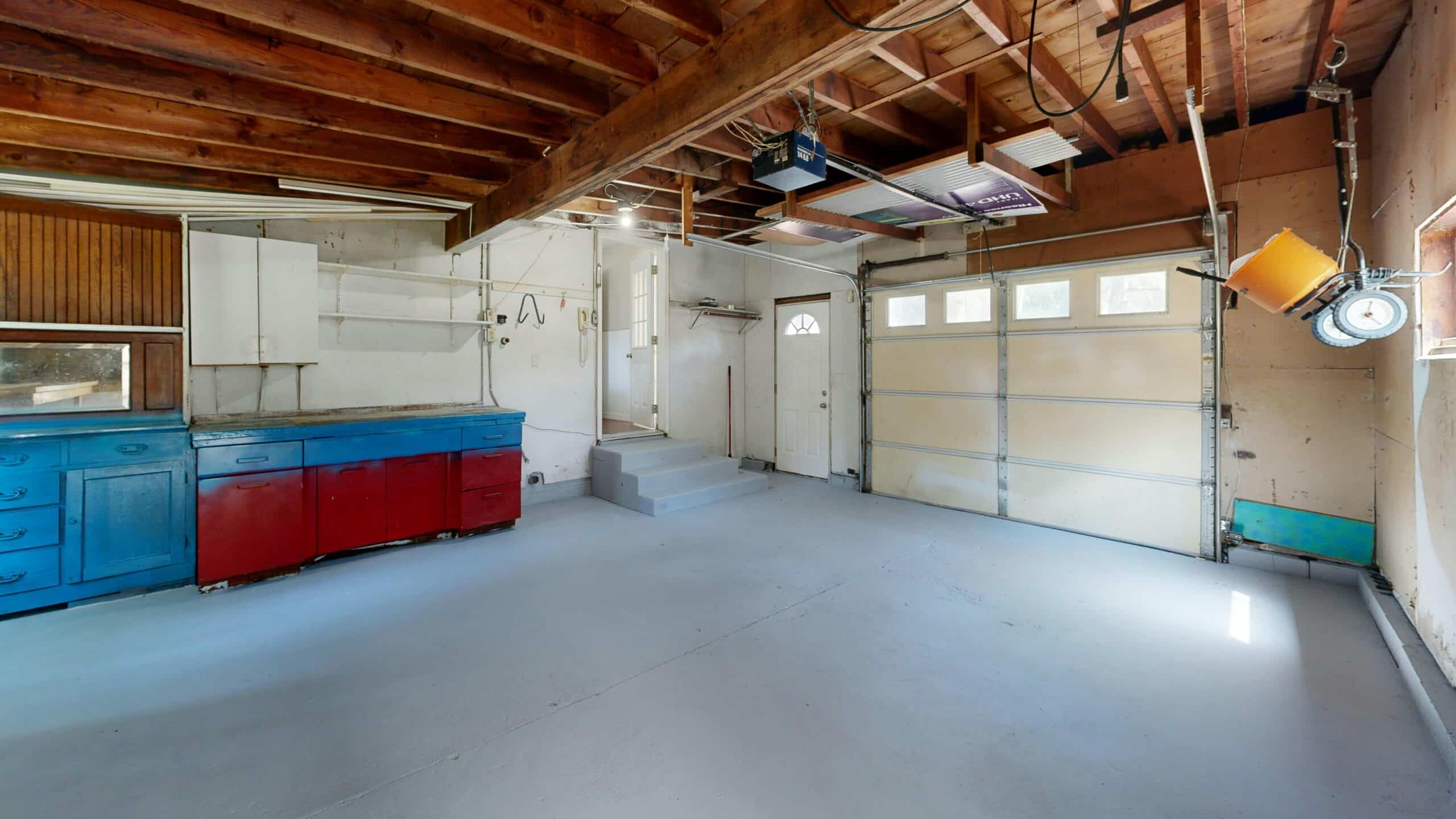
Recommended Garage Door Openers: What 40 Years of Installations Taught Us
When a customer walks into our Salt Lake City showroom and asks for an opener recommendation, the first question we ask is: what kind of garage do you have, and how often do you use it? That question matters more than the brand on the box.
Since 1985, Price’s Guaranteed Doors has installed openers in thousands of homes across Salt Lake City, Kaysville, St. George, and Boise. Our technicians have seen what holds up and what fails early. Cold Boise winters, the freeze-thaw cycles on the Wasatch Front, the 115°F summer days in Washington County. Climate puts equipment to the test in ways that spec sheets don’t warn you about.
This post covers the opener types we recommend, the features worth paying for, the questions to ask before you buy, and what the climate in your area means for long-term performance.
The Three Drive Types, and When Each Makes Sense
There are three common drive mechanisms in residential garage door openers: chain-driven, belt-driven, and jackshaft (also called wall-mount). Each one has a genuine use case. Choosing the wrong type is the most common mistake we see in both DIY installs and contractor work that wasn’t done by a specialist.
Chain-Driven Openers
Chain-driven openers use a metal chain to pull the trolley that moves your door along the rail. They’re the most widely installed type in the country and the most affordable upfront. They’re also the loudest.
If your garage is attached and shares a wall with a bedroom or living area, the rattling of a chain drive at 6 a.m. becomes a household issue quickly. We’ve gotten repair calls where the real complaint wasn’t mechanical. It was noise.
Chain drives make the most sense for detached garages, commercial applications, or homeowners on a strict budget whose garage doesn’t share walls with living space.
Belt-Driven Openers
Belt-driven openers replace the metal chain with a reinforced rubber or fiberglass belt. The motion is quieter and smoother. For attached garages in neighborhoods like Sugar House, Holladay, or Draper in the Salt Lake Valley, newer subdivisions in Kaysville and the Davis County corridor, or the North End and Warm Springs area in Boise, belt drives are consistently what our technicians recommend.
The price difference between a chain drive and a belt drive is usually $50 to $100 on the unit itself. For most attached-garage homeowners, that’s an easy call. The quieter operation is worth it on day one, and the belt is gentler on the door hardware over time. Less vibration means less wear on rollers, hinges, and the opener’s internal components.
Jackshaft Openers
Jackshaft openers mount to the wall beside the door rather than running along a ceiling rail. Instead of a trolley mechanism overhead, the opener connects directly to the torsion bar above the door and turns it to raise or lower the door.
This design frees up ceiling space entirely. For garages used as workshops, home gyms, or storage areas with overhead racks, that space matters. We install jackshaft openers regularly in homes in the Avenues neighborhood in SLC, where garages are narrow and ceiling clearance is tight, and in newer construction in the Boise foothills where garages are designed to do double duty as living or work space.
Jackshaft openers are also the right call for high-lift door configurations and for homes with garage ceilings below the standard seven feet.
DC Motors vs. AC Motors: This Matters More Than Most Buyers Realize
Older garage door openers used AC (alternating current) motors. Most modern residential openers use DC (direct current) motors instead. The difference shows up in a few practical ways that matter over the life of the unit.
DC motors have variable speed control built in. The door starts slowly, accelerates through the middle of its travel, then slows again before it reaches fully open or fully closed. That soft start-and-stop reduces mechanical stress on the springs, cables, and hinges with every single cycle. It also reduces noise.
On an average residential garage door, that’s 1,500 to 2,000 cycles per year. Over a decade, the gentler operation of a DC motor adds up to meaningfully less wear on every component the door connects to.
DC motors also support battery backup operation, which is something AC motors don’t do well. A DC-motor opener with a battery backup can complete around 20 open-and-close cycles during a power outage. For homeowners whose garage is the primary entry point to their home, which describes the majority of our customers across all four service areas, that’s not a nice-to-have. It’s a practical necessity.
Features Worth Paying For
Not every item on an opener’s spec sheet matters in daily use. These ones do.
Battery Backup. If your garage is your main way in and out of the house, losing power means losing access. A battery backup module adds $50 to $150 to the unit cost. We recommend it without hesitation. Power outages along the Wasatch Front during winter storms and in Boise during ice events are common enough that you’ll use it.
Obstruction Detection and Auto-Reverse. Federal law has required auto-reverse on new openers since 1993, but the sensitivity and response time varies significantly by model. Higher-end units detect an obstruction faster and reverse the door more reliably. In homes with children, pets, or elderly family members, this feature deserves attention beyond the minimum legal standard.
Wi-Fi Connectivity and Remote Monitoring. App-connected openers let you open, close, and check the status of your garage door from anywhere. We install these regularly for customers in St. George who split time between southern Utah and the Wasatch Front, and for Boise customers with vacation properties. Knowing your door is closed when you’re 400 miles away is a real use case, not a marketing bullet point. Whether the specific app ecosystem matters to you depends on what other smart home devices you already use.
Lighting. Built-in LED lighting in the opener head is standard on better units and worth checking for. Garage lighting is frequently an afterthought until it isn’t.
Climate Considerations for Salt Lake City, Kaysville, St. George, and Boise
Where you live affects which opener performs best and how you maintain it. We see this clearly across our four service areas.
Salt Lake City, Kaysville, and the Wasatch Front
SLC winters involve significant freeze-thaw cycling. Temperatures can swing 40 degrees in a single day during March and April. Opener limit settings can drift in these conditions, and metal components can stick or bind when temperatures drop overnight after a warm afternoon.
Kaysville and the Davis County corridor see some of the most pronounced inversion weather in northern Utah, with cold air pooling in the valley floor for days at a time. Garages in that area often go uninsulated, which puts extra strain on the opener motor during multi-day cold snaps.
We recommend lubricating the drive mechanism and checking the limit settings every fall before the cold season. Our annual maintenance program covers this as part of the standard visit. Customers in Kaysville, Sandy, Herriman, and Cottonwood Heights, where winters are consistently colder than the valley floor, benefit most from this fall tune-up.
St. George and Washington County
The desert heat is hard on rubber components and plastic housing. Belt-driven openers installed in St. George should use belts rated for high-temperature operation. UV exposure in garages without insulation accelerates wear on the belt material and on plastic housing around the motor head.
When we install openers in the Bloomington Hills, Sunbrook, and Foremaster Ridge areas, we advise customers to keep the garage insulated where possible and to avoid parking a hot car in a closed garage if the unit doesn’t have adequate ventilation. Heat-soaked openers fail earlier than they should.
Boise
Boise winters are colder and often wetter than Salt Lake City. Older neighborhoods like the North End, Warm Springs, and Southeast Boise have garages with minimal insulation, which puts thermal stress on the opener motor during sustained cold snaps. We’ve seen cheaper AC-motor openers struggle to complete full cycles at sub-20°F temperatures.
DC motors with variable speed handle these conditions more reliably. The soft-start feature is particularly helpful when the door hardware is stiff from cold. If you’re in Boise and shopping for an opener, don’t let a salesperson talk you into an entry-level AC unit just to save $80.
When to Replace Rather Than Repair
Garage door openers typically last 10 to 15 years with basic maintenance. A few situations where repair stops making sense:
The motor runs but the door doesn’t move, and the repair estimate is more than half the cost of a new installed unit. The opener uses an older 300 MHz frequency, which makes remotes harder to source and the system more susceptible to interference from neighboring units. The unit lacks auto-reverse or doesn’t meet current safety standards. The opener is more than 12 years old and you’ve had two or more service calls in the past two years.
If any of those apply, the conversation shifts from repair to replacement. We’ll tell you plainly which side of that line you’re on rather than patching a unit that’s going to need attention again in 18 months.
What Professional Installation Gets You
A garage door opener isn’t the most complicated piece of equipment to install. But small errors during installation have consequences that show up months later.
The motor force settings need to be calibrated to your specific door’s weight and size. Set too high, the door won’t reverse properly on an obstruction. Set too low, the door may not open fully in cold weather. The limit switches need to be set so the door stops in the right position, not two inches off the floor or straining against the header.
We’ve responded to calls after DIY installs where the force was set dangerously high, the opener was wired incorrectly, or the mount point couldn’t handle the vibration load over time. These aren’t edge cases.
Our technicians carry the parts to complete most installations in a single visit. We test the opener fully before we leave, including the safety reversal test, and we walk you through programming your remotes and keypad before we go. For customers in Kaysville, Boise, St. George, and across the Salt Lake Valley, that includes a review of the maintenance steps specific to your climate.
The Bottom Line
The right opener depends on your garage configuration, how you use the space, and where you live. Belt-driven DC-motor openers with battery backup are the right call for the majority of attached residential garages across our service area. Chain drives still make sense for detached garages and budget-constrained applications. Jackshaft openers earn their premium when ceiling space is limited or the door setup requires a wall-mount configuration.
If you want a direct recommendation for your specific situation, contact Price’s Guaranteed Doors or visit one of our showrooms. We’re at 3180 S. 460 W. in Salt Lake City and 282 N 650 W in Kaysville, with locations also serving St. George and Boise. We’ll tell you what we’d put in our own garage, and we’ll back it up with installation and service that’s been consistent for four decades.
View our full garage door opener services.
Related Articles
Garage Doors in Utah and Idaho: Your Complete Guide to Installation, Repair, and Modern Upgrades
Is your garage door making strange noises? Have you noticed […]
READ MORE
Price’s Doors Is Now Open in Kaysville, Utah
Bringing Trusted Garage Door, Entry Door, and Window Services to […]
READ MORE
Garage Door Safety 101: When to Step Back and Call a Pro inSalt Lake City
[…]
READ MORE