The Complete Homeowner’s Guide to Replacing Your Windows
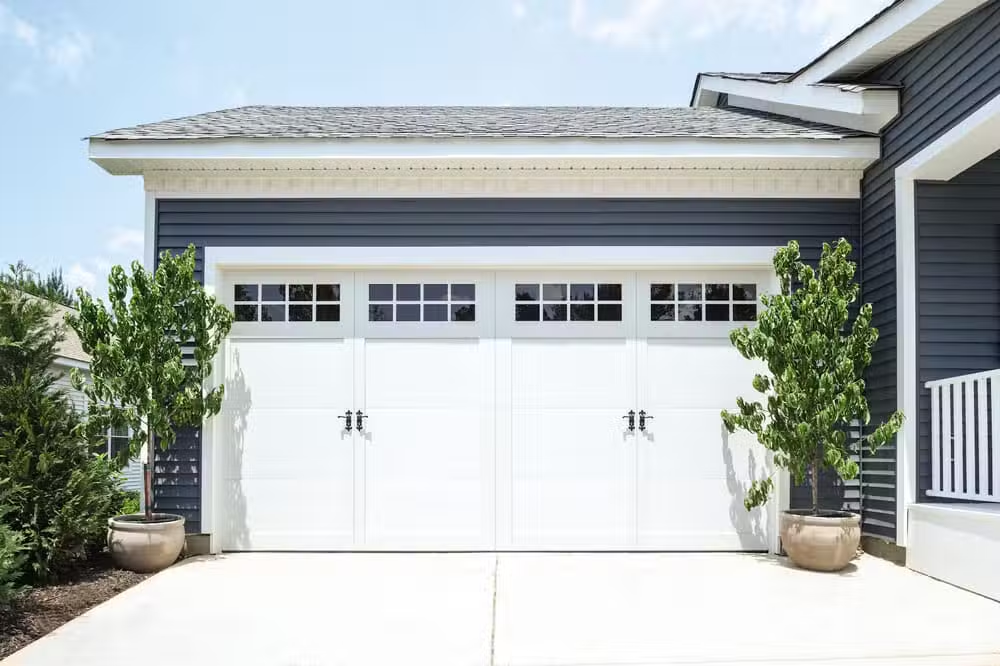
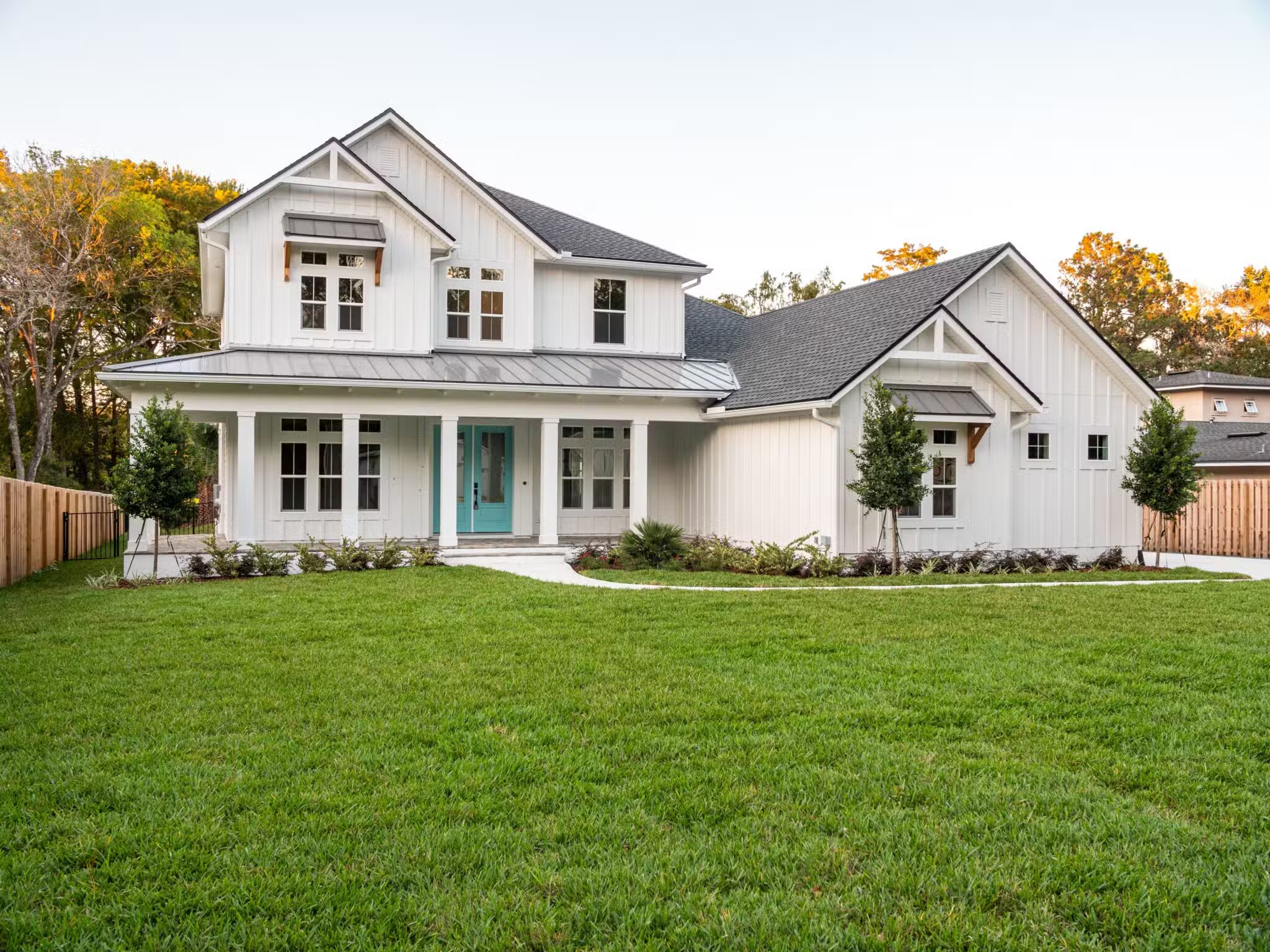
Ask most homeowners what they notice first about a house, and they’ll say the front door or the garage. But spend any real time looking at a home—really looking—and you’ll realize that windows define as much of the character and feel of a property as almost anything else. They frame your views, flood your rooms with natural light, and play an enormous role in how your home looks from the street. More than that, they are the primary barrier between your living spaces and the outdoor climate, working around the clock to keep heat in during winter and block it out during summer.
The problem is that windows age. Seals fail. Frames warp. Glass coatings degrade. And because the decline tends to happen gradually, homeowners often don’t realize how much their old windows are costing them—in energy bills, in comfort, and in home value—until they finally make the upgrade and feel the difference immediately.
Window replacement is consistently ranked among the top home improvement investments for both quality of life and resale value. New windows can reduce heating and cooling costs by a meaningful amount, eliminate cold drafts and condensation problems, dramatically reduce outside noise, and give your home’s exterior a fresh, updated look that buyers notice. If your windows are more than fifteen to twenty years old, or if you’ve noticed any of the warning signs described below, this guide will walk you through everything you need to know to make the right choice.
How to Know When It’s Time to Replace Your Windows
Windows rarely fail all at once. More often, they send quiet signals over months or years that most homeowners learn to live with rather than address. Here are the most important signs that replacement is overdue.
Drafts and air leaks are the most common complaint. If you can feel a distinct chill near a closed window on a cold day, or if a candle flame flickers when held along the frame, the seal has broken down. This means conditioned air is escaping and outdoor air is infiltrating your home continuously—and your HVAC system is paying the price every hour of every day.
Condensation between the panes is a definitive sign of seal failure in a double- or triple-pane window. That foggy or streaky appearance trapped between the glass layers is moisture that has entered through a broken seal, and it means the insulating gas fill has escaped. A window in this condition has lost most of its thermal performance and cannot be restored to its original efficiency—only replacement will fix it.
Difficulty opening, closing, or locking windows is both a convenience problem and a safety issue. Windows that stick, refuse to stay open, or won’t lock properly often indicate frame warping, hardware failure, or rot. Beyond the frustration, a window that doesn’t lock securely is a vulnerability in your home’s security perimeter.
Rising energy bills without a clear explanation often have windows as a contributing factor. If your utility costs have climbed over the years without a corresponding change in your usage habits, aging windows—along with poorly insulated doors—are frequently among the primary causes.
Visible damage to frames, sills, or sashes—including rot, water staining, chipped or peeling paint that keeps returning, or soft spots in wood frames—indicates moisture intrusion that will only worsen over time. Left unaddressed, water damage around window frames can spread into surrounding wall structures and create far more expensive problems.
Excessive outside noise is another sign that your windows’ insulating properties have declined. High-quality modern windows, particularly those with laminated glass or triple-pane construction, provide remarkable sound attenuation. If street noise, neighbors, or traffic feel like they’re almost inside your home, your current windows are no longer doing their job well.
Window Frame Materials: What You’re Really Choosing Between
The frame material you select shapes everything that follows—how your windows look, how they perform thermally, how much maintenance they’ll demand, and how long they’ll last. Each material has real advantages and real trade-offs, and the right choice depends on your specific climate, home style, and priorities.
Vinyl frames are the most popular choice in North America today, and the reasons are straightforward. Vinyl is inherently resistant to moisture, rot, and insects, never needs painting, and is available at a wide range of price points. Modern vinyl frames also offer solid thermal performance, as the hollow chambers within the frame can be filled with insulating foam to further reduce heat transfer. The trade-off historically was aesthetic—early vinyl windows had a somewhat plastic appearance—but today’s premium vinyl frames have improved considerably in design sophistication and are available in a growing range of colors and woodgrain textures.
Wood frames remain the benchmark for beauty, particularly in traditional, craftsman, colonial, and historic-style homes where the authentic warmth and grain of real wood is architecturally important. Wood is also an excellent natural insulator. The demands are real, however: wood frames require periodic painting or staining to prevent moisture damage, and they’re more susceptible to rot if maintenance lapses. Many homeowners choose wood-interior windows with a protective aluminum or vinyl cladding on the exterior to get the beauty of wood inside without the outdoor maintenance burden.
Aluminum frames offer strength and slim sightlines that maximize the glass area of the window opening. They’re lightweight, durable, and require virtually no maintenance. The significant drawback is thermal conductivity—aluminum transfers heat and cold readily, making it a poor insulator on its own. In cold climates, aluminum frames without a thermal break (an insulating barrier within the frame) can create condensation issues and allow significant heat loss. For this reason, aluminum is most commonly used in mild climates or commercial applications, though thermally broken aluminum frames have improved considerably.
Fiberglass frames represent the premium option in terms of pure performance. Fiberglass is dimensionally stable across a wide range of temperatures—it expands and contracts at nearly the same rate as glass, which means seals stay tight over decades. It’s stronger than vinyl, more thermally efficient than aluminum, and requires very little maintenance. The trade-off is cost: fiberglass frames typically run higher than vinyl alternatives, though their longevity and performance can justify the premium, particularly in climates with extreme temperature swings.
Composite frames combine multiple materials—often wood fibers and polymer resins—to achieve a balance of wood’s appearance with improved moisture resistance. They generally offer better thermal performance than aluminum and require less maintenance than solid wood, making them a practical middle ground for homeowners who value aesthetics but want reduced upkeep.
Understanding Glass: The Most Important Part of the Window You Never Think About
Most homeowners spend considerable time choosing frame materials and window styles, then give relatively little thought to the glass itself—which is arguably the most performance-critical component of the entire window. Here’s what the key terms actually mean.
Single-pane glass, still found in many older homes, provides minimal insulation and almost no noise attenuation. It’s the thermal equivalent of a very thin wall, and upgrading from single-pane to modern double- or triple-pane windows is where the most dramatic improvement in energy performance is felt.
Double-pane glass consists of two layers of glass separated by a sealed airspace, typically filled with argon or krypton gas. These inert gases are denser than air and significantly reduce the transfer of heat through the window. Double-pane windows are the standard for residential construction today and offer an excellent balance of performance and cost.
Triple-pane glass adds a third layer of glass and a second gas-filled chamber. The result is superior thermal insulation and substantially better sound reduction. Triple-pane windows are particularly valuable in very cold climates, on windows facing a noisy street or neighbor, or on any window where maximum energy performance is a priority. The additional cost over double-pane is real, but the performance difference in harsh climates is equally real.
Low-emissivity (low-E) coatings are microscopically thin metallic layers applied to one or more surfaces of the glass. They work by reflecting infrared radiation—essentially bouncing heat back toward its source—without meaningfully reducing visible light transmission. In winter, low-E coatings keep heat inside your home. In summer, they help block solar heat gain from outside. Different low-E formulations are optimized for different climates, so it’s worth discussing which coating type is appropriate for your region with your window professional.
The Solar Heat Gain Coefficient (SHGC) measures how much solar radiation passes through the glass, expressed as a number between 0 and 1—lower means less heat enters. In hot, sunny climates, a lower SHGC is generally preferable. In cold climates where passive solar warming is welcome, a higher SHGC on south-facing windows can actually reduce heating loads.
The U-factor measures the rate of heat transfer through the entire window assembly—lower is better. ENERGY STAR certification requires specific U-factor and SHGC values that vary by climate zone, and choosing ENERGY STAR certified windows ensures you’re getting glass that’s optimized for your local conditions.
Window Styles: Matching Form and Function
Beyond frame and glass, the operating style of a window shapes both how it looks and how it performs in practical use.
Double-hung windows, with two sashes that slide vertically and tilt inward for easy cleaning, remain the most popular style in American homes. They suit virtually every architectural style, are widely available, and their inward-tilting sashes make them easy to clean from inside—a meaningful advantage in upper-story applications.
Casement windows are hinged on one side and crank open outward. When closed, the sash presses firmly against the frame seal, creating an exceptionally tight closure that tends to outperform double-hung windows in air infiltration resistance. Casements are an excellent choice for rooms where maximum ventilation is a priority and work beautifully in contemporary and craftsman designs.
Picture windows are fixed, non-opening units designed purely to frame a view or bring maximum light into a space. Because they have no operating hardware and a single continuous seal around the perimeter, they are the most thermally efficient window style available. They work best in combination with operable windows nearby when ventilation is needed.
Sliding windows operate horizontally and work particularly well in spaces where vertical clearance is limited or where a wide, low opening is desired—common in basements, above countertops, or in contemporary home designs.
Bay and bow windows project outward from the wall plane, creating an alcove inside the room and expanding both the sense of space and the amount of natural light entering. Bay windows typically combine three panels at angles; bow windows use four or more panels for a curved profile. Both add significant architectural character and are a popular feature in living and dining rooms.
Awning windows are hinged at the top and open outward from the bottom, allowing ventilation even during light rain. They work well in bathrooms, kitchens, and basements, and are frequently paired with picture windows for a combination of unobstructed views and ventilation.
Why Professional Installation Is Worth Every Dollar
The highest-performing window on the market will deliver disappointing results if it isn’t installed correctly. Window installation is a precision task that directly determines how well the unit seals, insulates, and operates for the life of the window. Improper shimming can cause frames to rack or bow, preventing smooth operation and creating gaps in the weatherseal. Inadequate flashing around the rough opening can allow water infiltration behind the frame—damage that may not become visible until it’s extensive and expensive. And incorrect fitting of the sash within the frame affects both the quality of the weatherseal and the smoothness of operation from day one.
Professional installers bring the experience to recognize and address non-standard rough openings, correctly flash and seal each unit against the exterior wall assembly, ensure each window is perfectly plumb and square, and confirm that all operable sashes, locks, and hardware function smoothly before leaving the job. Most reputable window companies also stand behind their installation work with a warranty separate from the manufacturer’s product warranty—coverage that protects you if any installation-related issues emerge after the project is complete.
Questions to Ask Before You Commit
Walking into any window purchase equipped with the right questions puts you in a much stronger position to get the right product at a fair price. Before signing anything, make sure you have clear answers to the following:
- What is the U-factor and SHGC of this specific window, and does it meet ENERGY STAR requirements for my climate zone?
- Is the warranty on the window unit separate from the installation warranty, and what does each cover?
- Will the installation include new exterior trim, casing, and interior finishing, or just the window unit itself?
- How is the window flashed and sealed against the exterior wall to prevent water infiltration?
- What frame material and glass package do you recommend for my specific climate and home orientation?
- Are there any structural considerations with my existing rough openings that could affect the project?
- What is the expected lead time for my specific windows, particularly if custom sizes are needed?
- Is your company licensed, insured, and certified by the window manufacturer (required by some warranties)?
- Can you provide references from local installations in homes similar to mine?
- What is included in the price—removal and disposal of old windows, interior and exterior trim work, and cleanup?
The difference between living with old, failing windows and waking up every morning to a quieter, more comfortable, and more energy-efficient home is one of those upgrades that homeowners consistently say they wish they’d made sooner. Whether you’re replacing a single problem window or undertaking a full-home refresh, investing in quality windows—and having them installed by experienced professionals—is a decision that improves your daily life from the very first day.
Ready to Find the Perfect Windows for Your Home?
Whether you’re just starting to research or you already know exactly what you want, our team of window specialists is ready to help. We’ll evaluate your existing windows, discuss the options best suited to your home’s style and your local climate, and provide a clear, honest estimate with no surprises.
Get Your Free Window Consultation Today: https://pricesdoors.com/contact